When Pilots Go Rogue
This event has highlighted the limits of post-9/11 cockpit-door security, designed primarily to counter external threats.
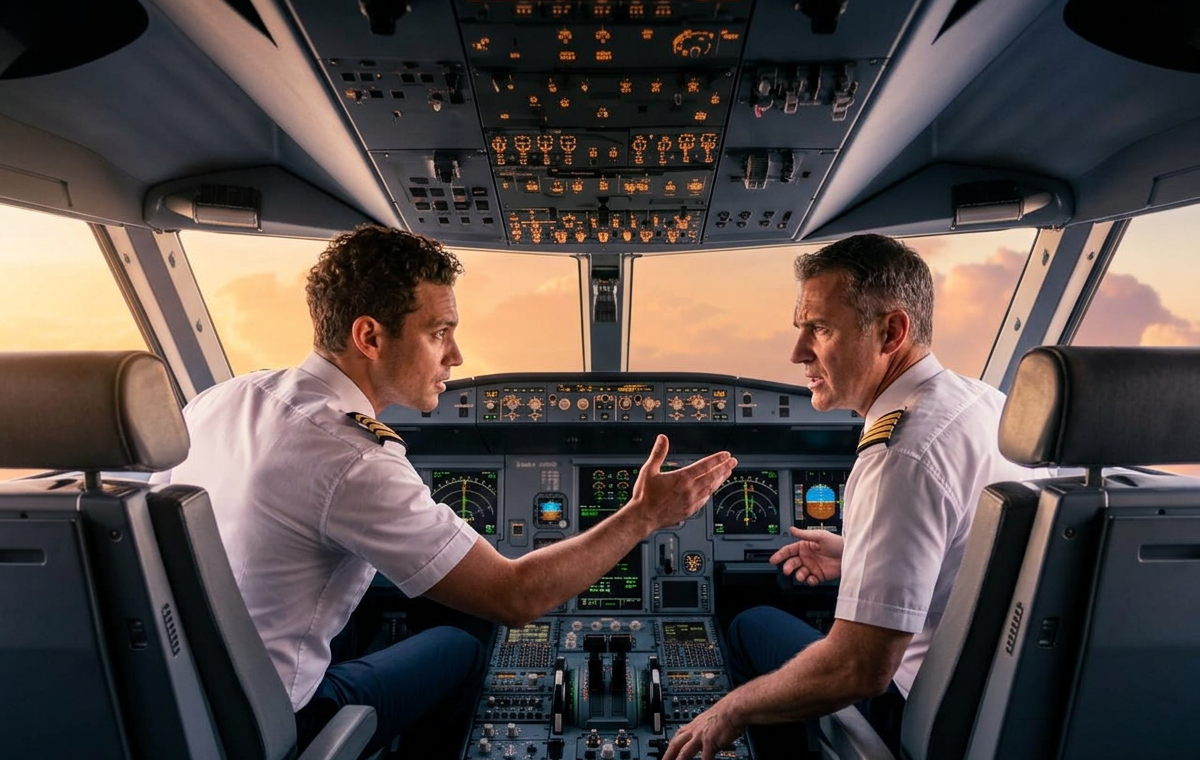
On 30 September 2026, while in flight, the co-pilot of flydubai flight FZ1073 (Dubai to Tel Aviv) attacked the captain with a crash axe in an apparent attempt to crash the plane. The Boeing 737, carrying about 174 passengers, mostly Israelis, including children, lost altitude sharply and made an emergency landing in Tabuk, Saudi Arabia. All passengers and crew survived.
The co-pilot is reportedly an Omani national, while the captain has been identified as an Indian national, Smit Machchhar.
The attack on the captain began as the flight approached Israeli airspace. The plane transmitted the 7500 “unlawful interference” code.
The aircraft descended rapidly by some 17,000 feet in under two minutes. Passengers described the aircraft entering a spin or nosedive and feeling as though they were losing control. The aircraft’s tail-rudder was damaged during the descent, with part of it detaching.
Despite serious wounds, the captain managed to release the cockpit door. Passengers and crew, including off-duty crew travelling as passengers, then stormed the cockpit.
Accounts describe the attacker standing over the control panel, attempting to smash the aircraft's systems. One passenger put the attacker in a chokehold while others restrained him with zip ties and headphone cords.
Off-duty pilots managed to stabilise and land the aircraft at Prince Sultan Bin Abdelaziz Airport in Saudi Arabia. Both pilots were injured and hospitalised; the captain underwent surgery and was reported to be stable. Saudi authorities arrested the co-pilot.
Israeli officials’ preliminary assessments suggest a possible terror attack aimed at crashing the plane. The specific motive remains under investigation. Passenger videos show the bloody aftermath outside the cockpit, with both injured men on the floor, and include descriptions of the struggle.
The event has highlighted the limits of post-9/11 cockpit-door security, designed primarily to counter external threats, not threats originating inside the locked cockpit between the two pilots.
Thus, the question is: how can we prevent a similar event?
Annex 17 Standards 13.2.1, 13.2.2 and 13.2.3 set out the requirements for protecting the flight crew compartment against intrusion and attack. These requirements cover procedures and resistance to penetration by small arms and grenade shrapnel. Moreover, the cockpit door shall be lockable and unlockable from either pilot’s station.
Introduced after the 9/11 attacks, these standards are designed to prevent unauthorised persons from forcibly intruding into the cockpit. Now, after this incident, a review must consider how to allow legitimate access when one crew member attacks the other.
Past incidents involving pilots crashing aircraft after locking others out of the cockpit include Germanwings Flight 9525 on 24 March 2015 and LAM Mozambique Airlines Flight 470 on 29 November 2013. China Eastern Flight 5735 in 2022 is another possible pilot suicide, but investigative details have not established the specifics.
After these instances, a two-person rule in the cockpit was introduced. This means that when a pilot leaves the cockpit, a cabin crew member must be present.
Smit Machchhar, the flydubai pilot, was lying on the floor of the flight deck, injured, when he managed to release the cockpit door, allowing passengers and crew to gain entry and overpower the co-pilot attacker. His actions and those of others saved 174 lives.
The motivations behind the co-pilot’s actions are becoming clearer as evidence of his radicalisation emerges. In turn, this raises questions about whether ‘insider threat’ protocols proved effective and whether the co-pilot exhibited any signs that should have prompted preventive measures.
It is by luck rather than design that this incident ended without loss of life. The next time pilots go head-to-head, fortune may not smile on us.