Chaos at European Airports
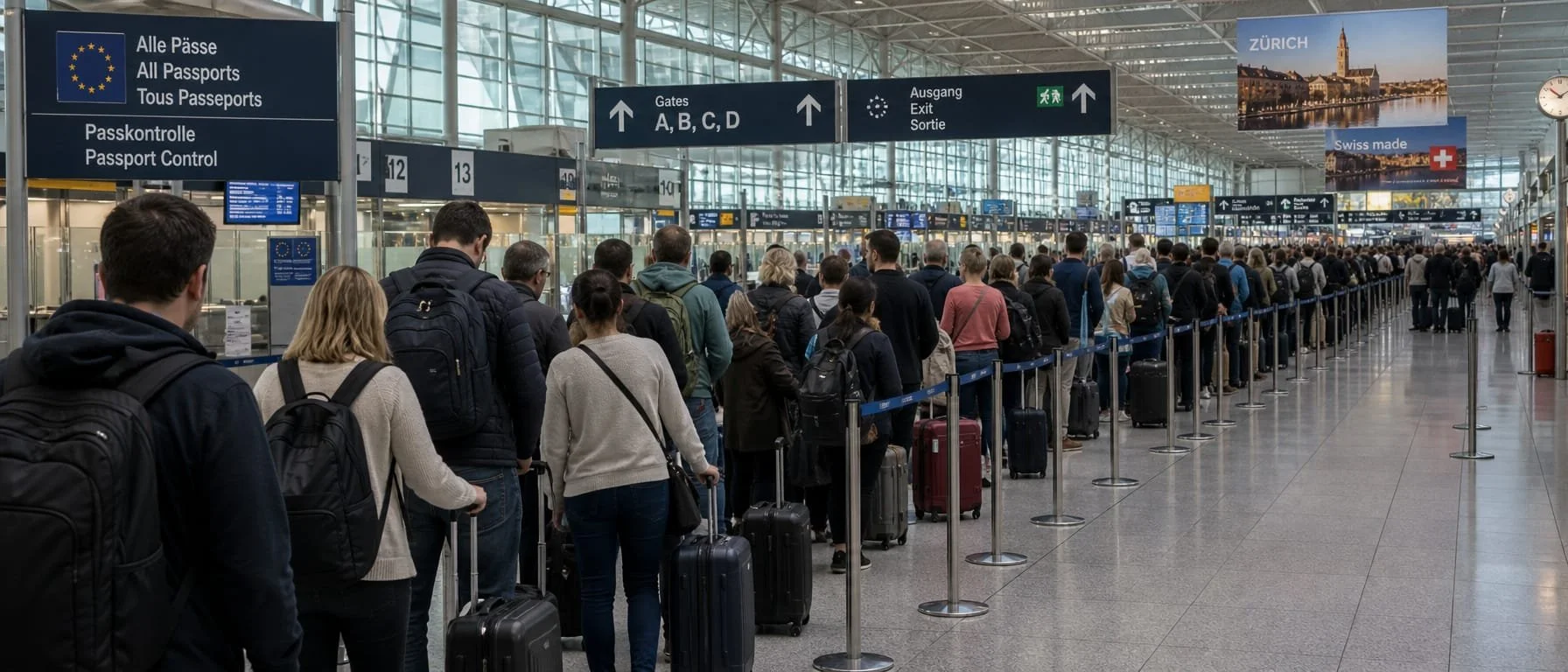
A systemic failure of the new digital Entry/Exit System
Across Europe this summer, travellers are facing hours-long queues, missed flights, and mounting frustration because of the long-awaited, now-controversial Entry/Exit System (EES), which has caused major delays at border control.
With passengers stuck for 3–5 hours at border control, families separated in queues, and flights departing half-empty, airports and airlines, including groups such as Airports Council International Europe and airline associations, have called for temporary suspensions or flexibility during peak periods. The EU has largely rejected full pauses, though some local adjustments have been made.
For additional context, this is primarily a border-control issue, not a traditional security screening issue. It affects passport checks and biometrics, not carry-on X-ray or liquid rules. Some airports are also separately upgrading to CT scanners that allow liquids and laptops in bags.
Here’s a breakdown of what’s happening and why.
What Is EES?
The Entry/Exit System is the European Union’s new digital border management tool. It replaces the previous passport-stamping process for non-EU citizens entering or leaving the Schengen Area.
Instead of a quick stamp, travellers now undergo:
Fingerprint scans
Facial recognition
Digital recording of entry/exit dates
The goal is better tracking of visa overstays, enhanced security, and more accurate data on who enters and leaves the bloc. It’s part of a broader push towards biometric border control. This sounds efficient on paper — but the reality has been anything but.
The Scale of the Delays
Since the rollout began earlier this year, reports have poured in from across Europe:
Queues of up to 5 hours at peak times, especially in popular destinations like Italy, Greece, Spain, Portugal, and the Netherlands.
Travellers missing connecting flights and onward journeys.
Major hubs and smaller regional airports alike are struggling — from Milan and Lisbon to Athens and beyond.
Airlines are reporting flights leaving with empty seats because passengers were still stuck in immigration lines.
The timing couldn’t be worse: peak summer holiday season, with record numbers of tourists flooding airports already stretched thin.
Why Is This Happening?
Several factors have combined to create the perfect storm:
Biometric Processing Takes Time — Every non-EU passenger must complete fingerprint and facial scans. Failed reads (due to dry hands, dirty sensors, lighting, or technical glitches) send people back to the end of the line or to manual booths.
Insufficient Infrastructure & Staffing — Many airports lack enough kiosks, dedicated lanes, or trained personnel. Smaller airports are particularly overwhelmed when multiple flights arrive at once.
Technical Glitches — Early reports highlighted software synchronisation issues between kiosks and central EU databases, resulting in manual data entry and slowing operations.
Massive Volume — The system wasn’t fully stress-tested for the sheer number of summer travellers. What works at a quiet hub collapses under holiday demand.
Airports and airlines have been vocal. Industry groups, including Airports Council International and airline associations, have sent open letters urging temporary suspension or flexibility during peak months, warning of a “systemic failure” rather than mere teething problems.
The Human and Economic Cost
For travellers, it means ruined itineraries, added stress, and lost money due to missed connections or accommodation. Families with young children, elderly passengers, and those with tight layovers suffer most.
Airlines face operational headaches, delays, and reputational damage. Tourism-dependent regions worry about the long-term impact if visitors come to associate Europe with endless queues.
The EU has acknowledged the issues but has resisted a full suspension, citing the system’s long-term security benefits. Some local adjustments have been made, but as of mid-July 2026, problems persist.
Tips for Navigating the EES Chaos
If you’re heading to Europe soon:
Arrive early — Aim for 3+ hours before departure when leaving the Schengen Area.
Check your airport — some, like Barcelona, handle it better than others. Research recent traveller reports.
Prepare your biometrics — Keep hands moisturised; follow instructions carefully to avoid retries.
Consider timing — Avoid peak arrival/departure windows if possible.
Stay informed — Monitor airport apps, airline updates, and EU travel sites for real-time advice.
Looking Ahead
The EES is here to stay as Europe modernises its borders. Over time, with better training, infrastructure upgrades, and possible software fixes, border-control delays should ease. But for the rest of this summer, patience is key.