Closure at El Paso
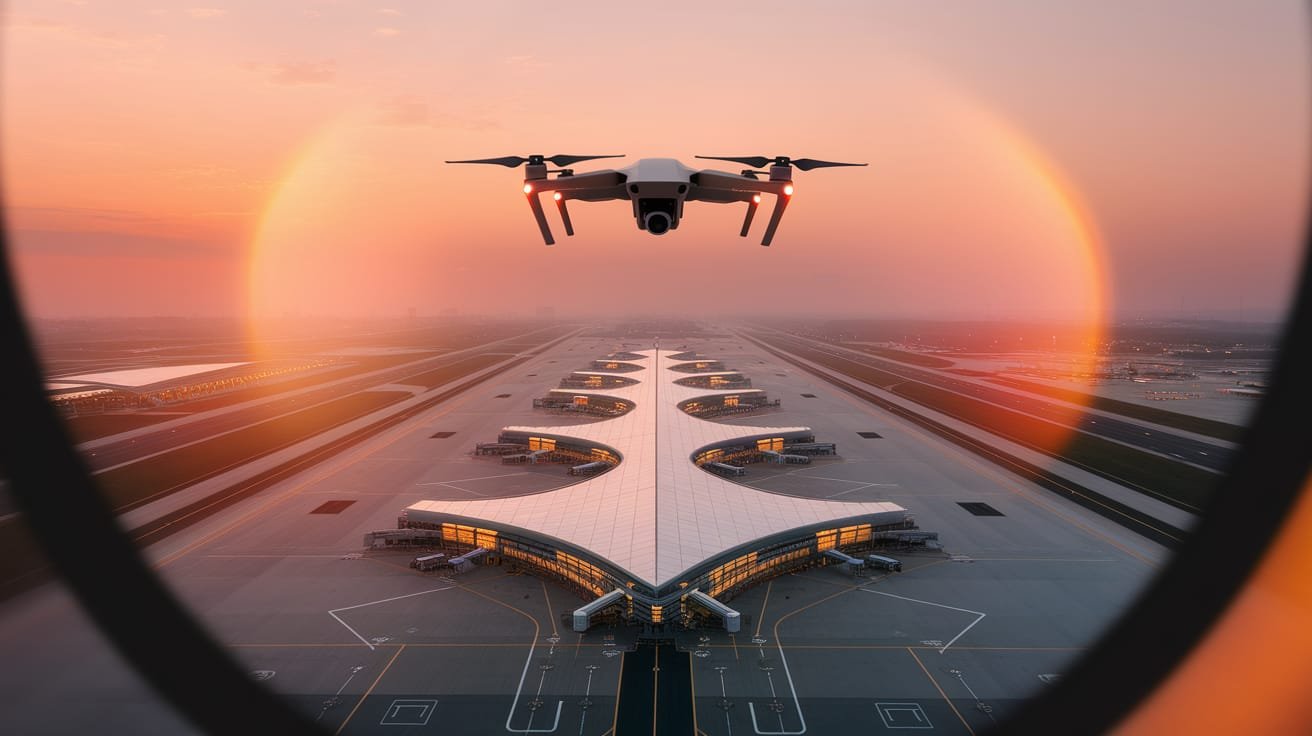
On February 11, 2026, the El Paso International Airport experienced a dramatic and highly unusual shutdown when the Federal Aviation Administration (FAA) abruptly closed the airspace for what was initially described as a 10-day period due to “special security reasons.” That got my attention.
In reality, the closure lasted only about seven hours, but it exposed tensions between federal agencies, revealed conflicting public explanations, and raised serious questions about coordination in national security and aviation safety.
The Sudden Shutdown
At around 23:30 hours on 10 February (local time), the FAA issued a Temporary Flight Restriction (TFR) that halted all flights in and out of El Paso International Airport. The restriction applied to airspace up to 18,000 feet within a roughly 10-nautical-mile radius, effectively grounding the airport that serves millions of passengers annually.
This move came without advance notice to local officials, including El Paso Mayor Renard Johnson, causing immediate disruption: flights were cancelled (reports range from 14 to 27), passengers were stranded, and critical operations, such as medical evacuations, were disrupted.
Such a broad, unscheduled closure of a major U.S. civilian airport is extraordinarily rare in peacetime—comparable in scale only to the nationwide shutdowns following the September 11, 2001 attacks.
Conflicting Explanations Emerge
Government agencies offered sharply different accounts, fueling confusion and speculation:
The Official Administration Line: Trump administration officials, including Transportation Secretary Sean Duffy, quickly attributed the closure to a response to Mexican drug cartel drones breaching U.S. airspace. Duffy posted on social media that the threat had been “neutralised” through swift action, framing it as a successful border security operation.
The Military Testing Angle: Multiple investigative reports from outlets such as AP, CNN, The New York Times, and CBS News pointed to a different trigger. The Pentagon (via the U.S. Army at nearby Fort Bliss) had been planning or conducting tests of high-energy laser-based anti-drone systems.
These directed-energy weapons are designed to disable unmanned aerial threats but have raised FAA concerns about potential risks to commercial aircraft, including eye damage to pilots and interference with flight paths.
Sources indicated the FAA acted preemptively after learning that the military (or Customs and Border Force, using loaned DoD tech) intended to deploy the system without prior safety coordination. A scheduled meeting between FAA and Pentagon officials to discuss mitigations was reportedly set for later in February.The “Party Balloon” Twist: Adding embarrassment to the saga, reports emerged that anti-drone lasers had been used earlier in the week to shoot down objects mistaken for threats. What officials believed were cartel drones turned out to be mylar party balloons. In one account, four such balloons were downed, heightening the FAA’s alarm over the technology’s accuracy and the lack of coordination, prompting the drastic airspace action.
The “cartel drone incursion” narrative, initially pushed by administration figures, was contradicted by anonymous sources, who suggested that the incident stemmed from internal bureaucratic friction rather than an external threat.
Resolution and Aftermath
After a high-level intervention—including involvement from the White House Chief of Staff—the FAA rescinded the TFR by early Wednesday morning, February 11. The Pentagon reportedly agreed to enhanced safety coordination, allowing flights to resume normally.
The episode highlighted ongoing challenges in integrating advanced military counter-drone technologies near civilian airspace, particularly in border regions such as El Paso, adjacent to Fort Bliss. The 2018 Gatwick incident underscored how difficult it is to deal with suspected drones.
All of this comes at an especially sensitive time for those overseeing air safety. On 25 January 2025, an Army helicopter collided with a passenger jet near Ronald Reagan National Airport above Washington, killing 67 people and putting safety protocols under intense scrutiny.
Although no commercial flights were harmed in the El Paso incident, it left travellers inconvenienced, local leaders frustrated, and the public questioning official transparency. It serves as a reminder that in an era of evolving drone threats—real and perceived—the lines between defence innovation, bureaucratic haste, and public safety can blur quickly, sometimes with serious consequences.