Iran War Casts Shadow Over the Skies
The Threat to Civil Aviation - March 2026
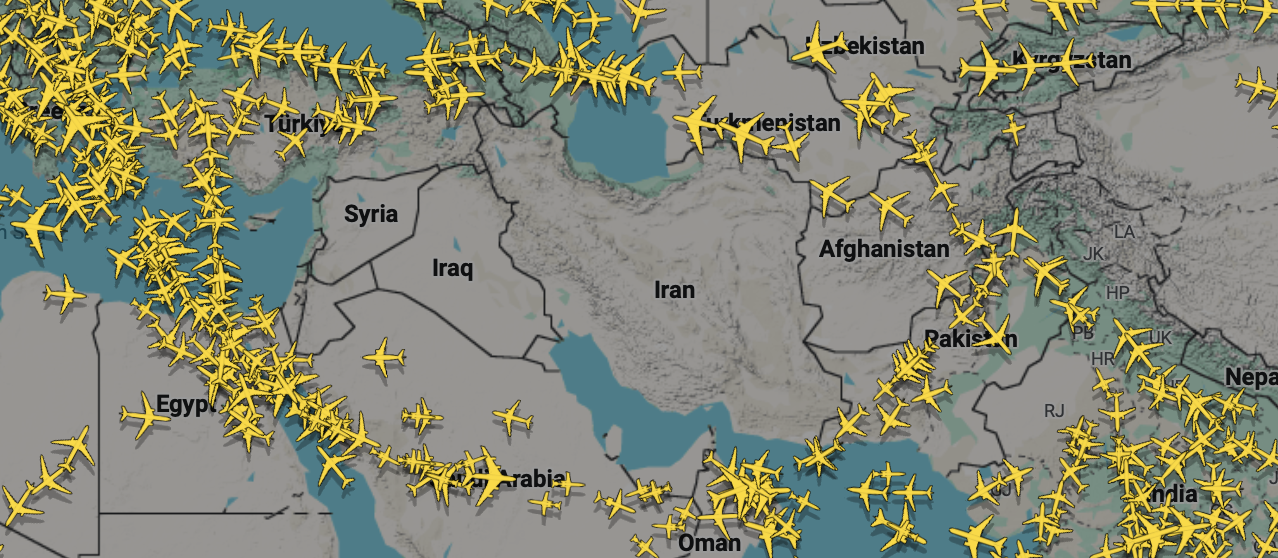
Image courtesy of Fightradar and Google Maps
The Iran conflict escalation, beginning with U.S. and Israeli strikes on February 28 targeting Iranian leadership, nuclear sites, missile infrastructure, and military bases, has elevated civil aviation risks.
The assassination of Supreme Leader Ali Khamenei and Iranian missile and drone attacks have closed large parts of Middle Eastern airspace, damaged major airports, and raised fears of terrorist cells or proxies targeting aviation.
Although no civilian airliners have been shot down, the ongoing conflict, alert defences, and terrorism risks pose a significant but regionally limited threat.
Immediate Operational Disruptions: Airspace Closures and Airport Strikes
The most tangible effect is the nearly complete shutdown of civil aviation across the Gulf and Levant. As of 5 March 2026, the airspace over Iran, Israel, Iraq, Jordan, Kuwait, Qatar, Bahrain, the UAE, Saudi Arabia, Syria, and parts of Oman is closed, partly closed, or restricted.
Major hubs such as Dubai International (DXB), Abu Dhabi’s Zayed (AUH), Doha (DOH), and airports in Bahrain and Kuwait have suffered damage from Iranian missiles and drones, causing injuries and at least one death. Terminal hits have been reported in Dubai and Kuwait.
Over 3,400 flights were cancelled in just the first few days, stranding hundreds of thousands of passengers and causing ripple effects worldwide. Carriers like Emirates, Etihad, and Qatar Airways are struggling to sustain operations.
GPS spoofing and jamming have increased navigation hazards, while insurers note that war-risk exclusions leave airlines vulnerable to significant revenue losses.
EASA has issued Conflict Zone Information Bulletins advising operators to avoid the area due to spillover risks from military activity and interceptions. Iranian strikes have deliberately or accidentally targeted civilian infrastructure, including airports hosting U.S. or allied assets.
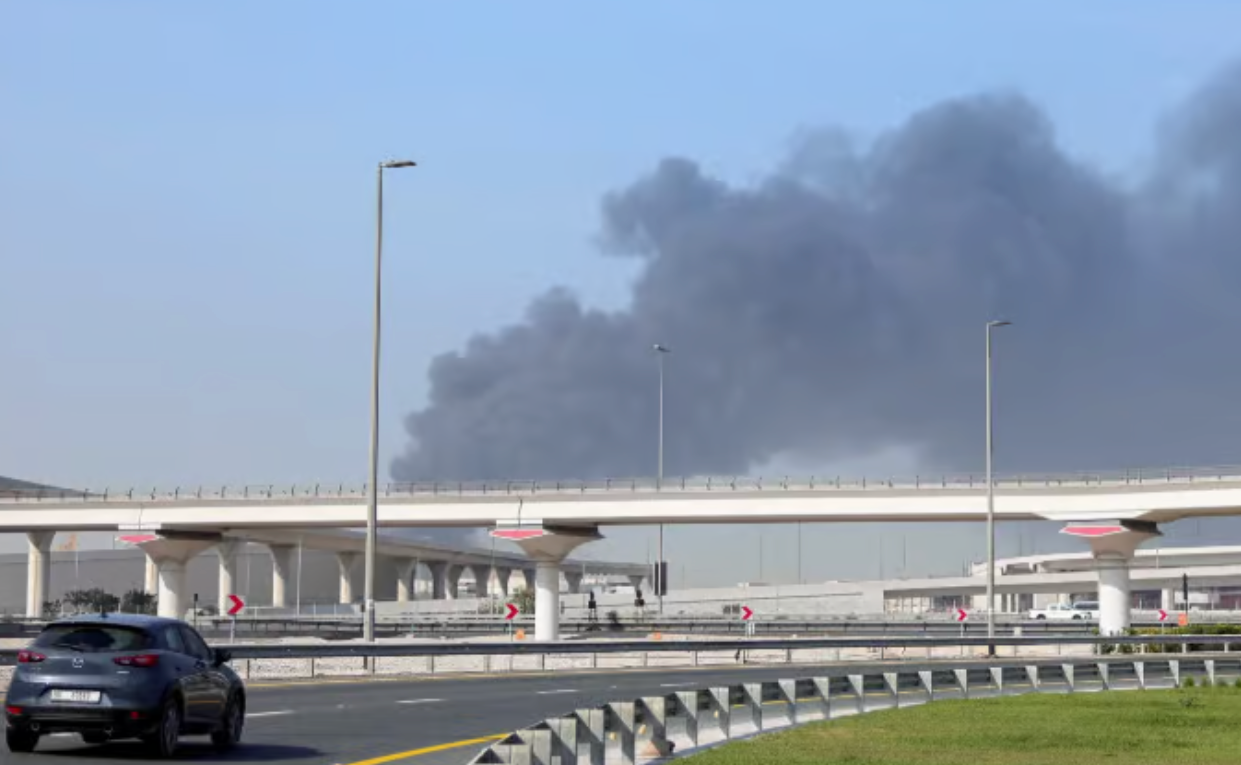
Smoke rises from the Dubai Terminal following a drone attack.
Military Risks to Civil Aircraft: Misidentification and Crossfire
The primary near-term danger to planes in the conflict zone is the fog of war. Iran's air defences and those of neighbouring states are on high alert. Historically, this has led to tragedy — in 2020, Iran mistakenly shot down Ukraine International Airlines Flight 752, killing all 176 on board.
No such civilian incident has occurred yet in 2026, but conditions are ripe:
Iranian drones and missiles have been launched in salvos toward Israel and the Gulf states.
Kuwaiti forces accidentally downed three U.S. F-15s in friendly fire.
Widespread military drone and missile activity increases the chance of misidentification, especially with electronic warfare degrading transponders and radar.
Terrorism Dimension: Sleeper Cells and Proxy Activation
Compounding the kinetic risks are credible intelligence warnings that Iran has activated long-dormant terrorist networks in retaliation for the strikes and Khamenei's death. U.S. and European officials, including the FBI and DHS, have highlighted:
Sleeper cells: Reports of potential Iranian or Hezbollah-linked operatives in the U.S. and Europe. Investigations into incidents like a shooting in Austin, Texas, and an attack on an Iranian dissident's gym in Canada are examining possible ties.
Proxies: Hezbollah (despite recent weakening), Houthis, and Iraqi militias have threatened broader action. Experts warn of attacks on U.S./Western targets abroad, including bases, embassies, and potentially civilian soft targets.
Aviation-specific concerns: While no confirmed plots against commercial flights have surfaced publicly, the pattern of Iranian/Hezbollah past activity (surveillance of airports, plots involving explosives or MANPADS) raises flags. Drones could target airport perimeters or cause chaos via incursions. Ground-based attacks on terminals, cargo, or parked aircraft are plausible, given that strikes are already hitting Gulf airports.
Analysts describe this as an "existential" moment for the Iranian regime, heightening the risk of asymmetric retaliation. As of 5 March, these are warnings rather than active plots, with no major Western airport reporting specific threats beyond increased vigilance.
Global and Long-Term Outlook
Outside the Middle East, the threat to civil aviation is elevated but manageable:
Security posture: Expect stricter screening and expanded no-fly lists at major hubs. U.S. and European airports serving routes to the region are already ramping up measures.
Economic fallout: Higher fuel costs from rerouting and oil price spikes (already surging) will pressure fares. Supply chains for aviation parts and fuel face disruption if the Strait of Hormuz were disrupted, threatened, or closed.
Duration: U.S. officials have signalled operations could last weeks. Proxy responses may persist longer, keeping terrorism alerts active.
Conclusion: Vigilance Without Panic
The Iran war has caused the worst disruption to Middle Eastern civil aviation since the Gulf War, with direct military risks now dominating and terrorism as a persistent secondary threat, especially if the conflict is prolonged or regime remnants retaliate.
Airlines, regulators (FAA, EASA, ICAO), and passengers are adapting quickly through rerouting, enhanced intelligence, and adjustments to war-risk insurance. The absence of civilian shootdowns or major terror attacks on flights so far is encouraging, but the situation remains fluid and dangerous. Travellers should check official advisories, avoid non-essential regional flights, and monitor developments closely.
Civil aviation has weathered geopolitical storms before. Resilience, strong intelligence, and international cooperation are vital for maintaining safety during this crisis. Stay informed, fly wisely, and hope for de-escalation to prevent further loss of lives or flights.