Long Arm Of The Law Reaches 30,000 Feet
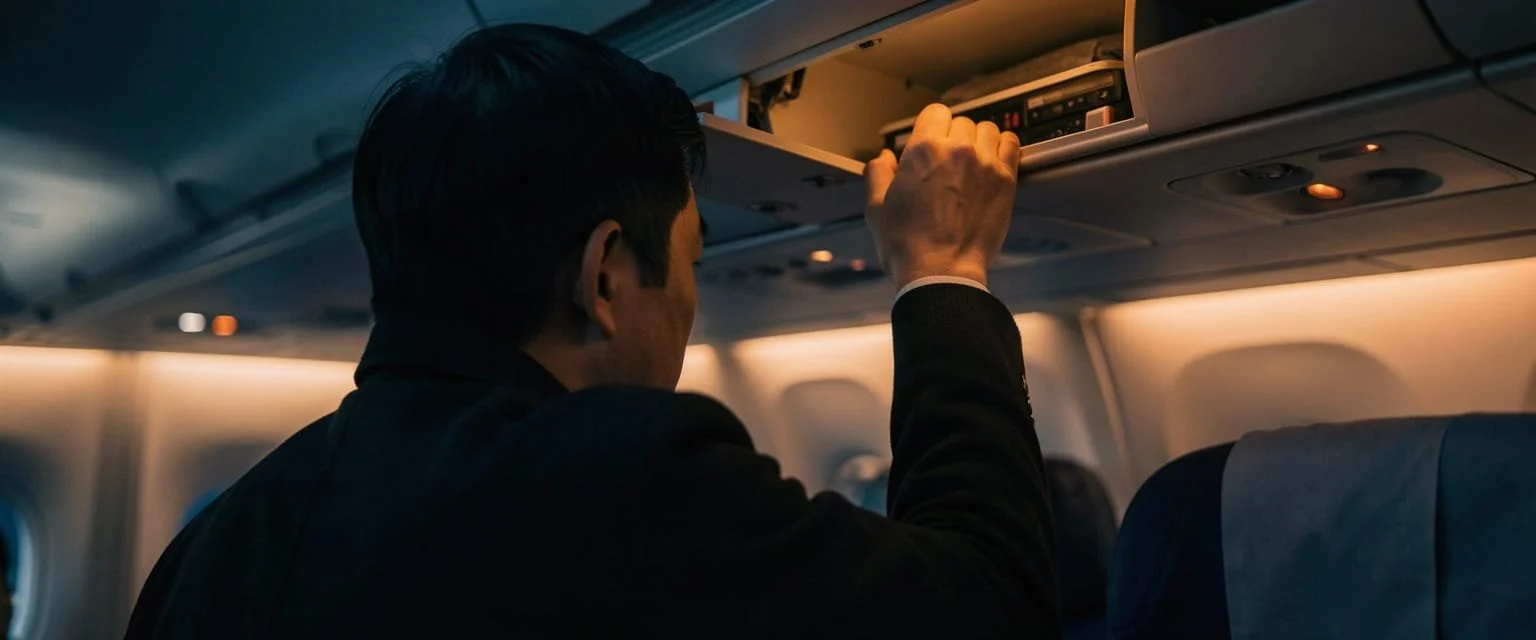
Culprits often strike when the lights are dim and passengers are sleeping.
Peng Yi, 48, found out the hard way: you can't outrun the law—even at 30,000 feet.
Picture this: Peng is on an Emirates flight from Dubai to Hong Kong and helps himself to a diamond ring and a Dior bracelet—HK$43,000 worth—from a Louis Vuitton bag in the overhead bin. This week, the District Court sentenced him to 16 months in prison, sending a clear message that in-flight theft is a serious offence.
On flight EK380, Peng rifled through a white handbag in the overhead bin. Someone saw him, recorded it, and alerted the owner. Her jewellery was missing, so the crew contacted the authorities.
Peng told police he acted out of greed. Realising he’d been seen, he panicked and ditched the loot in a rubbish bag. The ring and bracelet were never recovered. He pleaded guilty.
In mitigation, Pang’s defence argued this was a one-off incident. That didn’t wash. Judge Josiah Lam noted Peng’s 68 trips in two and a half years, including three recent to Dubai. However, Peng claimed he worked odd jobs on the mainland for 3,000 yuan a month. His travel record appeared inconsistent with this claim.
The judge didn’t believe Peng’s claim, calling him a professional “cabin rat.” Significantly, it’s likely Peng wasn’t alone—he probably gave the stolen goods to a partner on board.
“If you are searching for global data on in-flight theft, you will find it challenging to find. And that’s one of the difficulties in tackling cases: we lack a complete understanding of trends.”
When the crime occurred outside its jurisdiction, how did Hong Kong charge Peng? Well, it’s simple, if your flight’s headed for Hong Kong, the law’s waiting, even if you’re still in foreign airspace. This is due to the Tokyo Convention (1963) and Hong Kong’s Aviation Security Ordinance (Cap 494).
These rules allow Hong Kong to arrest you no matter where the crime was committed; if you land in Hong Kong, you’re within reach.
The Tokyo Convention is a worldwide agreement established in 1963 that sets out procedures for dealing with unlawful acts on flights. It is part of a series of such agreements under the International Civil Aviation Organisation (a UN agency) that specify standards and recommended practices for civil aviation.
Previously, the lack of international legal coverage meant some offenders escaped punishment; the Tokyo Convention changed this. The Convention also permits pilots to restrain troublemakers and deliver them upon landing—crew members and even passengers can help.
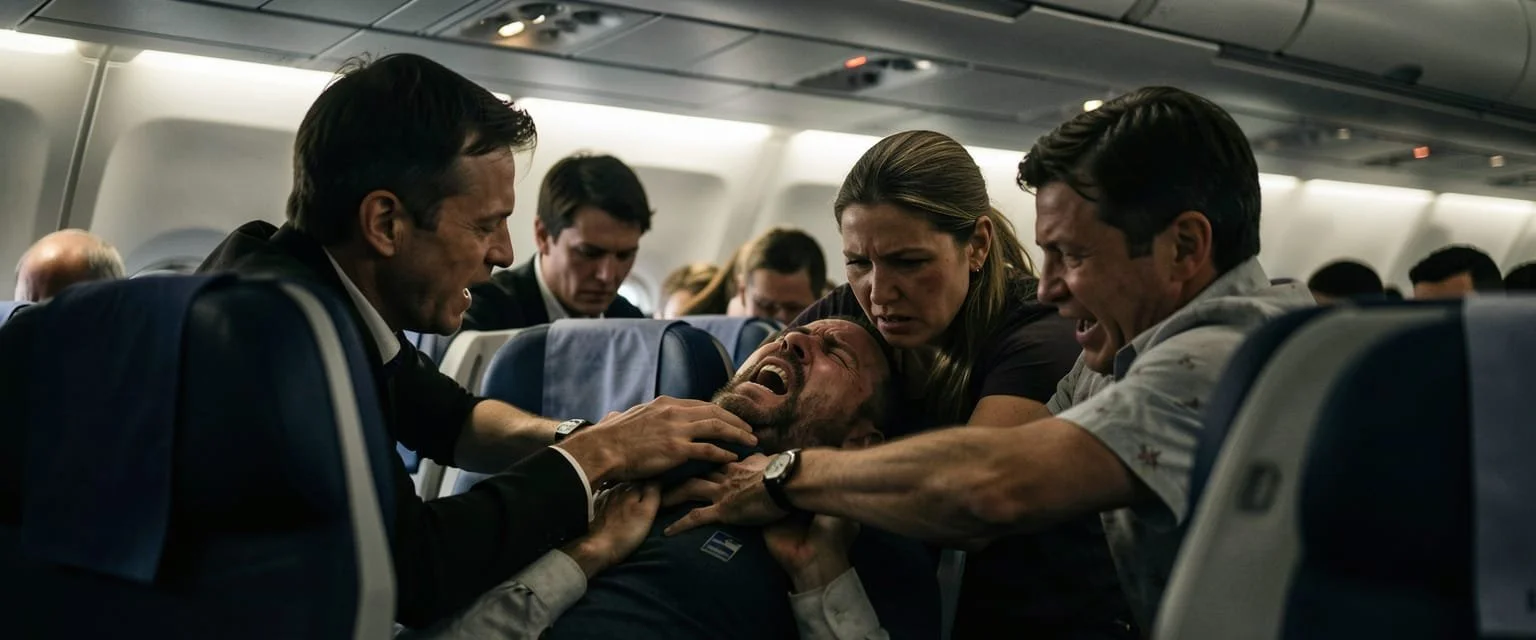
Crew and passenger are authorised to use reasonable force if necessary.
If you are searching for global data on in-flight theft, you will find it challenging to find. And that’s one of the difficulties in tackling cases: we lack a complete understanding of trends.
My research revealed the following: In the first 10 months of 2024, Hong Kong reported 169 such cases involving HK$4.32 million (S$709,300) in valuables—75 per cent more than the same period in 2023. Malaysia had 146 cases, up from 88 the previous year. Tokyo and Singapore are also experiencing increases.
And these reported instances are probably just the tip of the iceberg. It’s well known that some airlines quietly resolve incidents, and many victims don’t bother to report them. Therefore, the real numbers are likely higher.
“In-flight theft is carried out by groups exhibiting identifiable patterns before the flight, at the gate, and in flight, thereby making it possible to identify potential suspects”
The International Air Transport Association (IATA), which represents airlines, admits that in-flight thefts are increasing, particularly on certain Asian routes. And the culprits favour busy, short-haul routes in Asia, where thieves can escape before being caught.
In response to concerns about in-flight theft, IATA and Qatar Airways organised a December 2025 workshop that brought carriers together to find solutions, share sensitive operational insights, identify practical mitigation strategies, and suggest shareable best practices.
Participants confirmed that in-flight theft is organised (as expected) and carried out by groups exhibiting identifiable patterns before the flight, at the gate, and in flight, thereby making it possible to identify potential suspects. Therefore, crew training in behaviour recognition and clear SOPs will be beneficial. A unified, industry-wide approach to prosecuting offenders was also recognised as essential.

Law enforcement and the airlines need to cooperate to tackle in-flight theft.
To begin, it is agreed that improved data reporting is essential. Consequently, a standardised taxonomy and anonymised dataset will be created.
Taking the Peng case as an example, his travel patterns strongly suggest suspicious activity that demands immediate further investigation. The fact that a low-paid individual travelled 68 times over 30 months should have set off alarms for behavioural detection officers, assuming Peng had ever been questioned. However, it seems he was not. This neglect underscores the urgent need for more vigilant monitoring.
As the airline industry responds to this challenge, collaboration with law enforcement agencies will be vital. Conversely, police forces and other authorities must have robust procedures in place to investigate and prosecute cases when evidence is available. Remember that collecting statements and evidence can be difficult with witnesses who are travelling or in transit, especially when translation complicates the process.
Based on my experience of policing at airports, these challenges are not insurmountable with proper training and adequate planning. Only through this collective approach will villains like Peng be deterred.