ICE at U.S. Airports - What could go wrong?
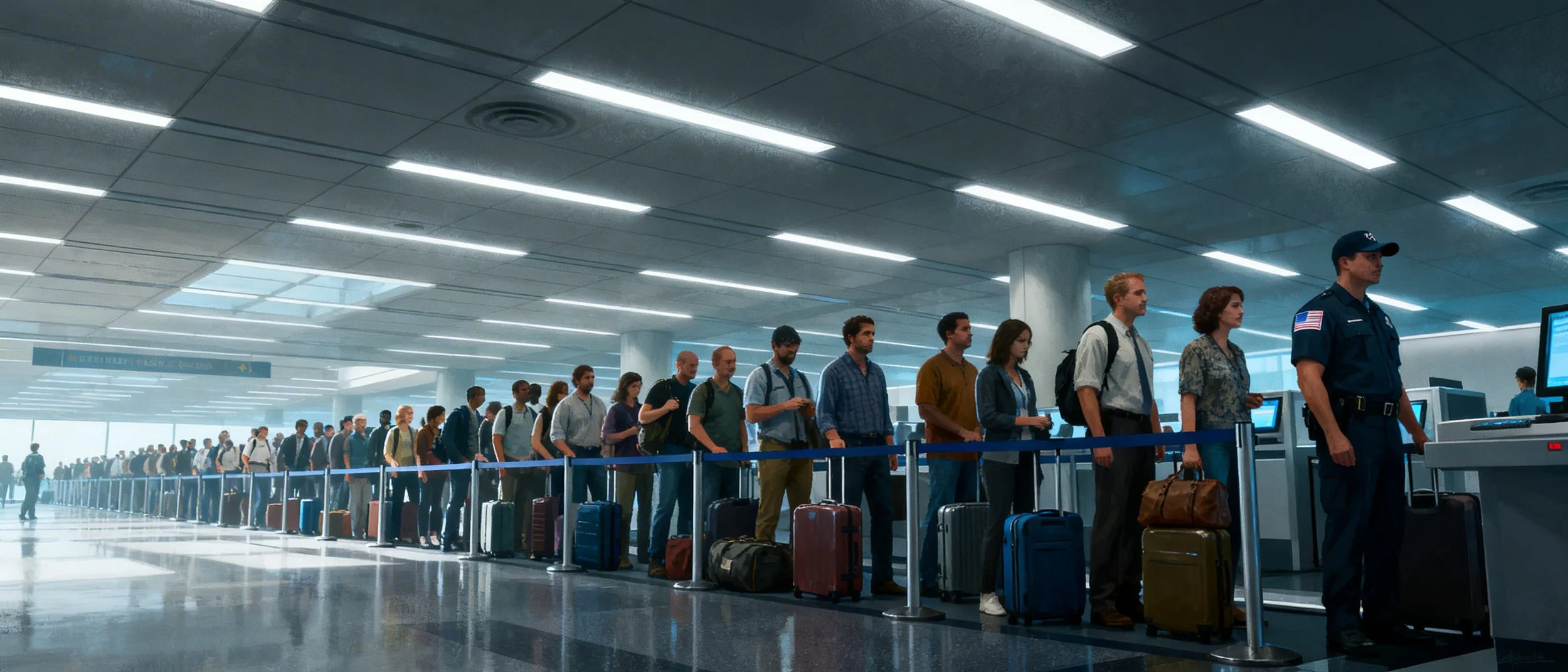
Passengers are waiting upwards of three hours to clear security
The deployment of ICE (Immigration and Customs Enforcement) agents at U.S. airports, which began on March 23, 2026, warrants serious scrutiny. It stems from a partial government shutdown affecting the Department of Homeland Security (DHS), which has dragged on for several weeks and produced severe staffing shortages at the Transportation Security Administration (TSA), the agency responsible for keeping passengers safe at airports.
TSA officers have been forced to work without pay — a situation that has predictably led to mass absenteeism and resignations, and in turn, hours-long delays at screening checkpoints. President Trump and White House Border Czar Tom Homan have chosen to frame the ICE deployment as a temporary fix to ease congestion by handling non-screening tasks, such as:
- Managing and moving security lines
- Crowd control in terminals
- Guarding entrances/exits
- Freeing up TSA agents for core screening duties
Homan insisted that ICE agents would not operate X-ray machines or conduct specialised screening — an admission, in itself, that these agents lack the training the job demands. Yet they are still being placed inside one of the most security-sensitive environments.
Trump explicitly stated that agents would perform "security like no one has ever seen before," including the "immediate arrest of all illegals" at airports. This is not the language of crowd management — it is the language of a mass enforcement operation.
“ICE is trained to arrest and remove people — full stop. TSA is trained to screen passengers and safeguard civilian aviation infrastructure. ”
This is the first time in U.S. history that armed ICE agents have been deployed to replace or support trained airport security personnel. That alone should give every American pause. Critics — including civil rights organisations, aviation experts, and legal scholars — contend that this risks instilling fear in travellers, particularly immigrants and mixed-status families, raises serious safety concerns given ICE's lack of airport-specific training, and dangerously distracts from the core mission of aviation security.
I am also questioning what effect it might have on the wider aviation security system. For instance, can airlines be certain that standards are being maintained? Likewise, overseas airports may need to consider what, if any, extra precautions they might need for flights arriving from the U.S.
After all, a deployment this rapid and this poorly conceived does not just risk diluting aviation security; it threatens the structural integrity of a system that millions of people worldwide depend on every single day.
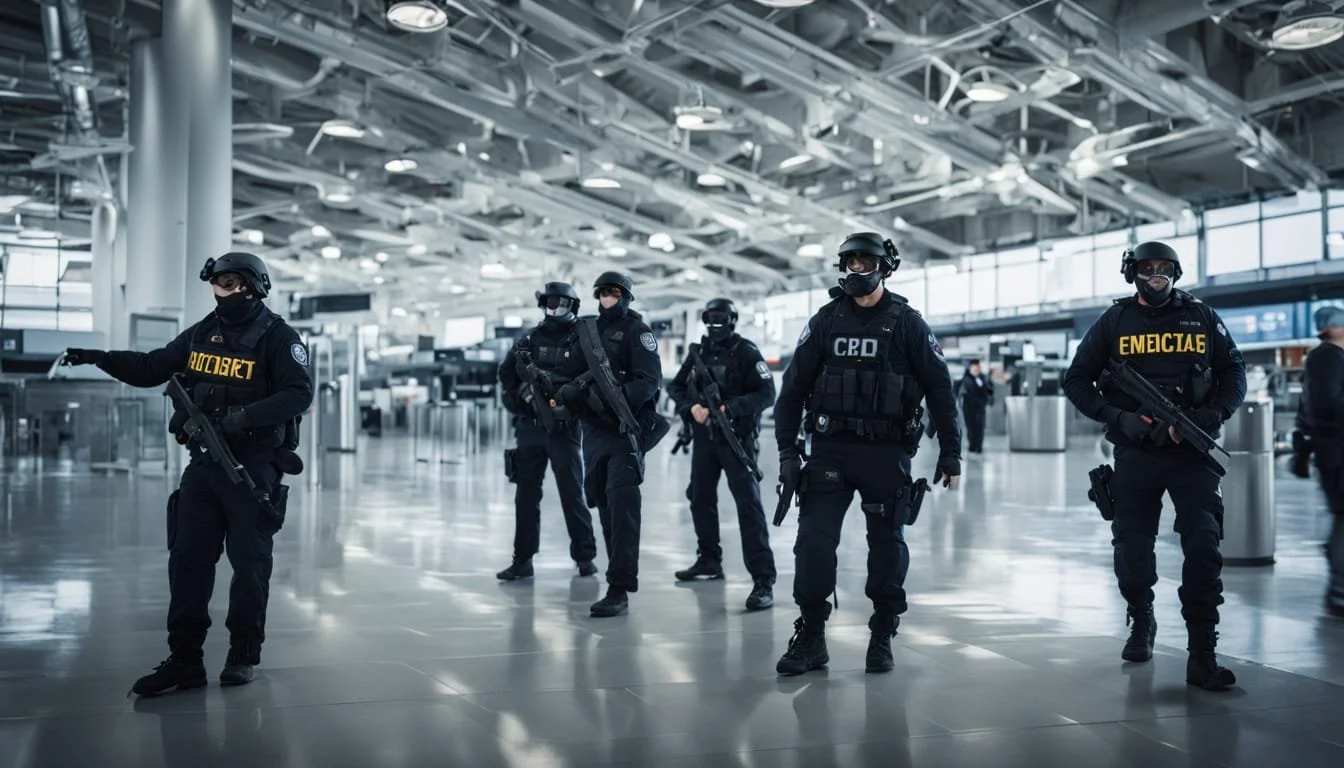
There is fine line between effective security at airports and an overbearing presence.
The following risks are not hypothetical. They are predictable, foreseeable, and completely avoidable.
Confusion Between Agencies and Roles: ICE is trained to arrest and remove people — full stop. TSA is trained to screen passengers and safeguard civilian aviation infrastructure. These are fundamentally different missions, requiring fundamentally different skills. Mixing the two in a live airport environment not only causes confusion for travellers and staff, but it also creates dangerous gaps in accountability that malicious actors could exploit.
Facilitation and Flow: It is a fundamental principle of aviation security that passenger facilitation and security must function together. Airports are highly complex environments — busy, stressful, and heavily regulated. ICE agents lack training in managing these dynamics. Assigning them to this role does not address a gap; it creates one. It is also important to note that TSA unions have strongly opposed this deployment, recognising the risks of mixing enforcement culture with a security-screening environment.
Escalation of Force and Public Safety Risks: This remains arguably the most urgent concern. ICE operations have a documented history of aggressive use of force — including chemical agents and fatal shootings. Imagine that in a crowded terminal filled with families, children, and international travellers. Any arrest that is resisted or that provokes intervention from bystanders could escalate. This is not alarmism. It is a predictable outcome of deploying enforcement officers with no airport-specific training into one of the world’s most complex public environments.
Chilling Effect on Travel and Broader Disruption: The damage extends beyond safety concerns. The mere presence of ICE agents in airports may deter travel — not only among undocumented individuals but also among legal immigrants, mixed-status families, visa holders, and international visitors who have every right to be there. The economic impact on tourism, business travel, and the aviation industry could be substantial and long-lasting.
“With the increase in terrorist threats amid the Iran conflict, authorities cannot afford to work with staff who might be hostile or disloyal. ”
The U.S. authorities appear to recognise at least some of these challenges. Notably, they have confirmed that ICE officers will not deploy wearing their trademark face coverings — a small concession, but one that implicitly acknowledges how threatening that imagery is to the travelling public.
In brief, airports are already high-stress, high-stakes environments governed by strict, carefully crafted security protocols developed over decades. Whether ICE agents can effectively assimilate into the civil aviation security system remains uncertain.
Furthermore, the threat from disgruntled insiders is a crucial issue that needs serious attention. With the increase in terrorist threats amid the Iran conflict, authorities cannot afford to work with staff who might be hostile or disloyal. Such weaknesses could compromise security, harm operational efficiency, and damage public trust—consequences that would take years to repair.
While the situation remains fluid, I’ll be watching keenly.